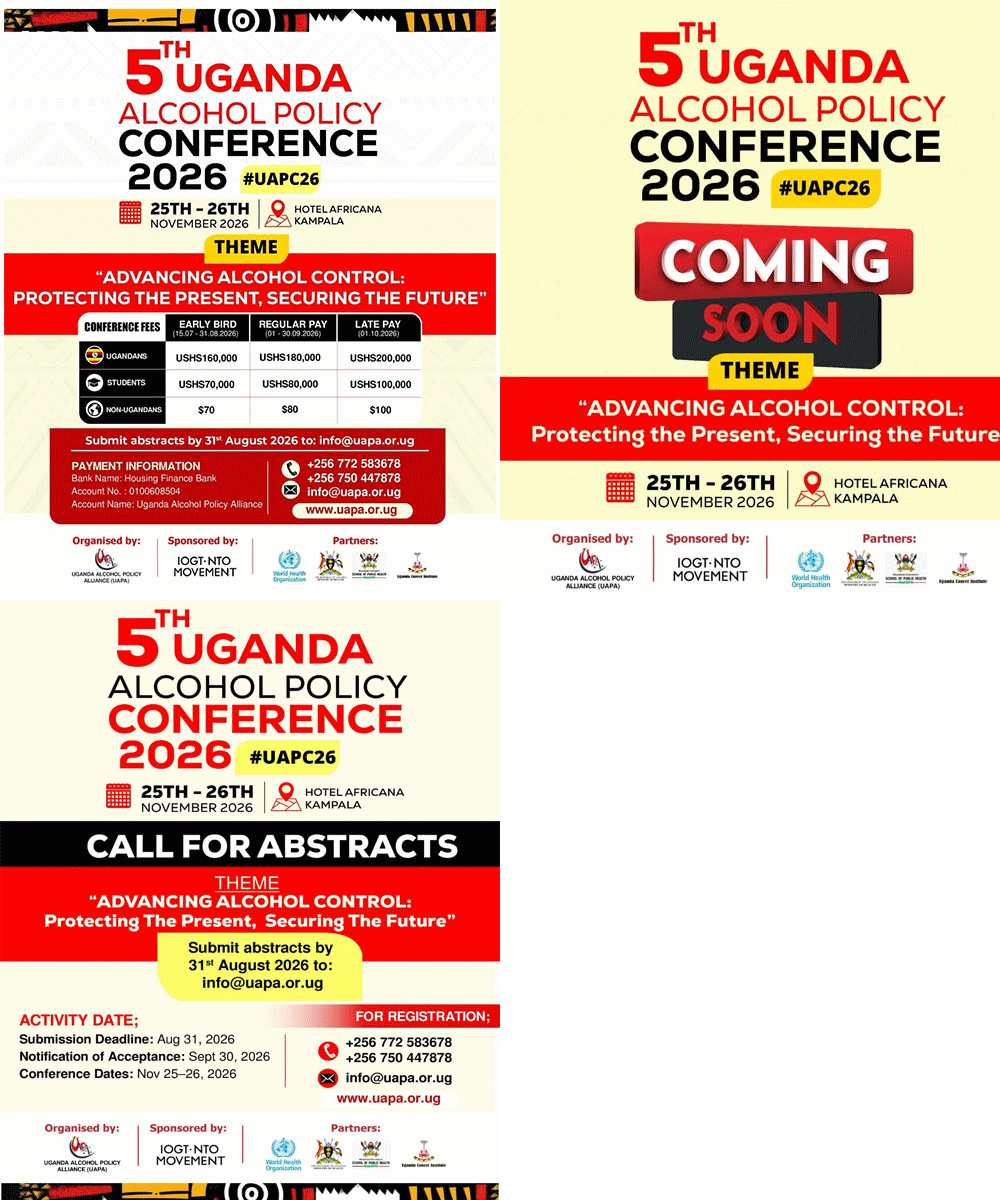
2026 UAPC Conference Theme
Beyond Alcohol Harm: Whole-of-Society Action for Health and Socio-Economic Wellbeing
2026 UAPC Conference Sub-theme
The following sub-themes are proposed for the 5th Uganda Alcohol Policy Conference (#UAPC26)
This sub-theme focuses on individual-level health interventions, moving from early identification to rehabilitation. Typical topic areas will include, but not limited to:
- Screening, Brief Interventions, and Treatment (SBIT): Scaling up early-detection protocols in primary healthcare and community settings.
- Harm Reduction Strategies: Managing Alcohol Use Disorders (AUD) through compassionate, evidence-based harm reduction methodologies.
- Mental Health Integration : Addressing co-occurring psychiatric disorders (e.g., depression, anxiety) alongside substance dependence
This sub-theme will include studies that investigatedd the environmental, social, and cultural factors that drive harmful alcohol consumption and other psychoactive substance use at the grassroots level. Typical topic areas will include, but not limited to::
- Gender-Based Violence and Harms : Understanding the correlation between harmful alcohol consumption, compromised household security, and instances of domestic or sexual violence.
- Youth Protection and Education: Devising preventative education, life-skills interventions, and establishing safe environments for adolescents
- Local Leadership and Grassroots Mobilization : Empowering civil society, religious institutions, and local governance (e.g., city/district bylaws) to monitor and regulate alcohol in local communities
This sub-theme will explore the pathophysiological impacts of alcohol on the body and its intersection with disease transmission/ development. Typical topic areas will include, but not limited to:
- NCD Prevention and Management : Tackling alcohol-attributable cancers, cardiovascular diseases, liver cirrhosis, and hypertension.
- Infectious Disease Comorbidities: : Addressing the critical intersection of heavy alcohol use with HIV/AIDS and tuberculosis (TB) acquisition and treatment adherence.
- Maternal, Neonatal, and Child Health : Interventions for Fetal Alcohol Spectrum Disorders (FASD) and maternal health risks
This sub-theme focuses on strengthening inter-agency coordination (government, civil society, faith-based organizations, and academia) for Alcohol and other psychoactive substance harm reduction. Typical topic areas will include, but not limited to:
- Coordinating the Whole-of-Society Framework : Models for bridging the Ministry of Health, Ministry of Trade, Industry and Cooperatives, Ministry of Gender, Labour and Social Development (MoGLSD), Ministry of Internal Affairs, other government ministries and agencies, local government authorities, and the private sector.
- The NDA’s Pivotal Role: Expanding the regulatory scope of the National Drug Authority (NDA) beyond pharmaceuticals to include active monitoring, licensing, and management of all psychoactive substances.
- Integrated Institutional Frameworks : Operationalizing Uganda’s National Alcohol Control Policy and aligning it with international frameworks like the WHO SAFER Initiative.
This sub-theme discusses the macro-level, "best-buy" policy interventions to curb population-wide alcohol harm, policy development, enforcement mechanisms, and legislative action on alcohol and other psychoactive substance harm reduction. Typical topic areas will include, but not limited to:
- Strengthening Substance Regulation : Policy reviews and legislative innovations aimed at curbing the illegal production, adulteration, and unregulated marketing of all psychoactive substances.
- Compliance and Monitoring: Mechanisms for the National Drug Authority (NDA) and law enforcement to strictly monitor misuse, enforce blood alcohol limits, regulating distribution. sobriety checkpoints, and other enforcement strategies
- Fiscal Policies and Taxation : Examining the socio-economic impacts of pricing, taxation, and marketing bans as deterrents.
This sub-theme will provide a platform for scientific evidence, harm reduction innovations, and community-level monitoring for alcohol and other psychoactive substance harm reduction interventions. Typical topic areas will include, but not limited to:
- Data and Surveillance : Sharing findings on the prevalence, determinants, and health burdens of combined alcohol and psychoactive substance abuse in Uganda.
- Harm Reduction Interventions: Evaluating the success of local treatments, counseling, and medical interventions for substance use disorders.
- Traditional and Herbal Psychoactives : Researching the regulation, compounding, and safety profiles of non-conventional and traditional psychoactive substances.
This sub-theme will contribute efforts that seek to raise national consciousness and prioritizes the protection of the vulnerable populations like the youth. Typical topic areas will include, but not limited to:
- Protecting Youth and Vulnerable Groups : Strategies to prevent early initiation into substance use and shield youth from aggressive, targeted marketing.
- Public Awareness Campaigns: The role of the National Drug Authority (NDA), media, and civil society in disseminating accurate, evidence-based information.
- Community Education and Faith Institutions : Engaging grassroots structures to reduce stigma and change societal norms around alcohol and substance consumption.
The sub-theme will highlight the socio-economic benefits of reducing harm, such as workforce productivity, mental health, and family stability. Typical topic areas will include, but not limited to:
- Workforce Productivity : Evaluating the economic impact of absenteeism, injuries, and lost labor hours attributed to substance misuse.
- Mental Health and Family Stability: Investigating the correlation between substance abuse, domestic trauma, gender-based violence, and mental health challenges.
- Poverty Alleviation : Exploring how controlling the accessibility and affordability of alcohol can reduce household economic strain and divert spending toward essential needs